History of Memecoins
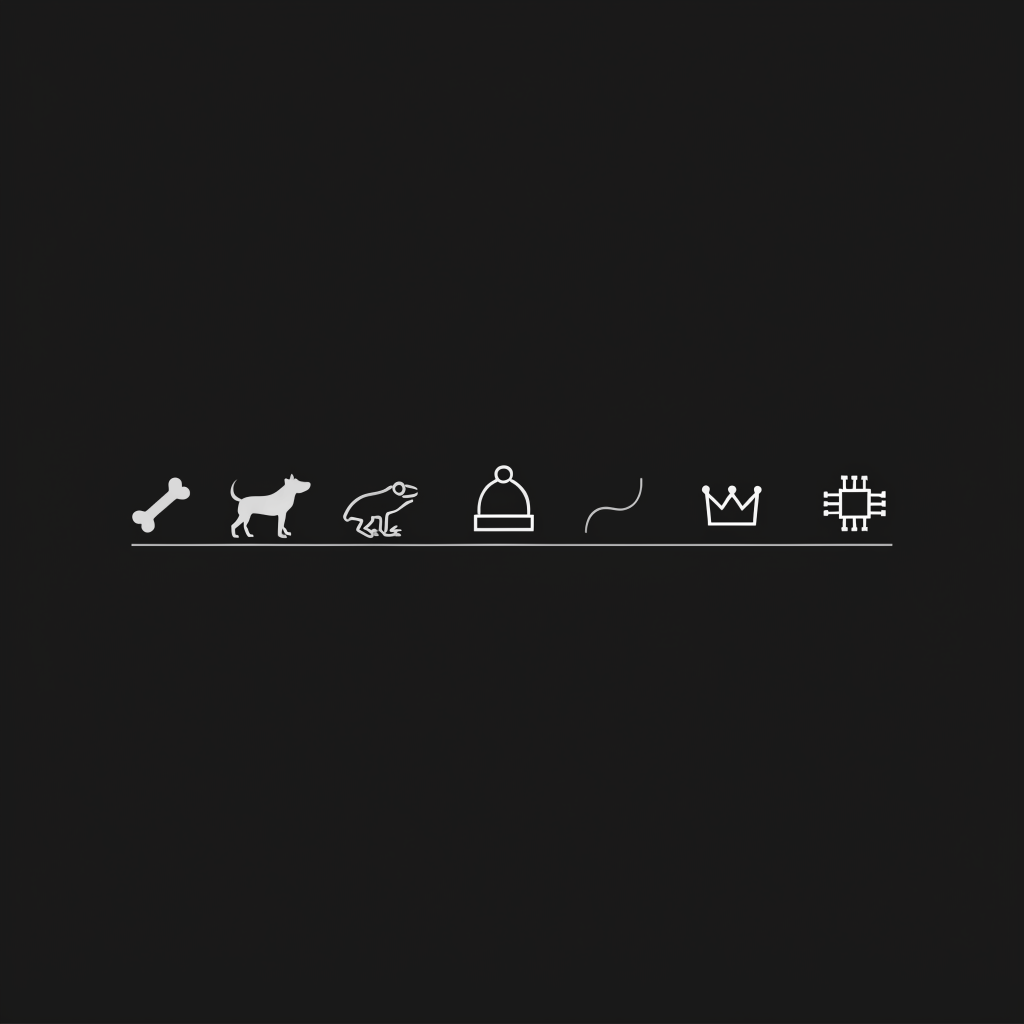 Image: original illustration, memecoin.wiki | |
| updated | August 2026 |
|---|---|
| reading time | 13 minutes |
Meme coins began as a joke in December 2013, when Dogecoin paired a Shiba Inu photo with a real blockchain, and the genre has since cycled through Shiba season, the Solana migration, pump.fun's industrialized trenches, a celebrity coin peak, an AI agent boom, and a 2026 winter, minting and erasing billions of dollars at every turn.
- 1 2009 to 2013: before the joke, there was Bitcoin
- 2 2013: Dogecoin invents the joke coin
- 3 2020 to 2021: Shiba Inu and the first billion dollar meme season
- 4 Late 2022 to 2023: BONK revives Solana, Pepe proves the model
- 5 Late 2023 to early 2024: dogwifhat and the move to Solana
- 6 2024: pump.fun industrializes the trenches
- 7 Late 2024: the AI agent era begins
- 8 January 2025: the celebrity coin peak
- 9 2025: the AI agent bust and the launchpad wars
- 10 Late 2025: the streamer meta and creator capital markets
- 11 2026: the memecoin winter, and the metas after it
- 12 References
A meme coin is a cryptocurrency whose value comes from culture and attention rather than any technical function, and the category has existed since Dogecoin launched as satire in December 2013. What follows is a dated walk through every major meme coin era: the founding joke, the dog coin cycles, the migration to Solana, the industrialization of launches under pump.fun, the celebrity and AI agent waves, and the 2026 metas that followed the crash. Full sourcing for each fact lives on the linked article; this page exists to connect them into one continuous timeline. The wiki's own meme coin and the trenches pages cover the culture in more depth; this page is the chronology.
2009 to 2013: before the joke, there was Bitcoin
Meme coins only make sense against what came before them. Bitcoin launched in 2009 as a serious attempt at digital money, and by late 2013 it had produced a wave of imitators, "altcoins," most claiming some technical improvement. Billy Markus, then a software engineer at IBM, and Jackson Palmer, a product manager at Adobe, both thought the altcoin market had become absurd, and decided to prove it with a coin that made no serious claims at all.
2013: Dogecoin invents the joke coin
Dogecoin launched on December 6, 2013, built on a 2010 photograph of Kabosu, a Shiba Inu owned by Japanese teacher Atsuko Sato, captioned in multicolored Comic Sans. The joke worked immediately: within two weeks Dogecoin was processing more daily transactions than Bitcoin. Its early community defined itself through absurdist generosity rather than trading, raising money to send the Jamaican bobsled team to the 2014 Sochi Olympics and to fund water wells in Kenya, and to sponsor a NASCAR livery. On December 25, 2013, just weeks after launch, hackers stole about 21,000 dollars worth of DOGE from the Dogewallet service, and the community's "SaveDogemas" donation drive covered the loss within a month, an early demonstration of the collective behavior that would recur across the genre. Every meme coin traded in the trenches since descends from this template: an asset whose only fundamental is a shared joke.
Dogecoin's second life began in 2021, when Elon Musk adopted it as a running bit on Twitter. Market capitalization crossed 85 billion dollars around May 5, 2021, and DOGE hit an all time high near 0.73 dollars on May 7, 2021, before falling nearly 30 percent the next night when Musk called it "a hustle" on Saturday Night Live, the first widely watched instance of a pattern later traders would call selling the news. Musk kept returning to the bit for years, including replacing Twitter's logo with the Doge image in April 2023 and, in November 2024, having Trump name his new government efficiency initiative "DOGE" days after the election, repricing a nine year old meme coin around a policy announcement. As of August 19, 2026, DOGE trades around 0.070 dollars, a market capitalization near 10.9 billion dollars, still the largest meme coin by market value.
2020 to 2021: Shiba Inu and the first billion dollar meme season
In August 2020, a pseudonymous developer known as Ryoshi launched Shiba Inu on Ethereum, branding it the "Dogecoin killer" and sending half its one quadrillion token supply, unsolicited, to Ethereum founder Vitalik Buterin, as proof the team could never dump a hidden stash. In May 2021 Buterin donated about a billion dollars worth of the SHIB he had received to India's COVID relief fund and burned the rest, roughly 6 billion dollars worth at the time, saying he did not want the power; the burn became one of the most cited events in meme coin history. SHIB then rode whale accumulation and a viral Robinhood listing petition to an all time high of about 0.000086 dollars on October 27, 2021, a market capitalization of roughly 41 billion dollars that briefly overtook Dogecoin. The 2021 season, DOGE near 97 billion dollars and SHIB near 40 billion dollars in the same year, proved meme coins could reach the market value of real corporations on sentiment alone, and it built the retail audience that would later populate the trenches.
Late 2022 to 2023: BONK revives Solana, Pepe proves the model
The next cycle began in the wreckage of the FTX collapse. On December 25, 2022, an anonymous team airdropped BONK to Solana NFT holders, artists and developers, one of the largest community distributions the chain had seen, at a moment when Solana's price and reputation were at historic lows. BONK is remembered in trench lore as "the coin that saved Solana," and it established the template every later Solana meme coin followed: a fair, wide distribution, an animal mascot, and an explicitly anti venture capital posture. Its all time high came on November 20, 2024, at about 0.000059 dollars, a market capitalization above 4 billion dollars.
Meanwhile on Ethereum, anonymous developers launched Pepe on April 14, 2023, positioning it explicitly as successor to the dog coin cycle, with no presale, no team allocation and a renounced contract. It crossed a 1 billion dollar market capitalization within about three weeks and, after Binance listed it in May 2023 with zero listing fees, kept climbing toward a final peak of about 11 billion dollars on December 9, 2024, briefly putting a pure meme coin into the top 20 cryptocurrencies by market value. Pepe proved Dogecoin and Shiba Inu were a genre, not a fluke, and its success helped shift meme coin culture back toward frogs after two straight dog coin cycles.
Late 2023 to early 2024: dogwifhat and the move to Solana
dogwifhat (WIF) launched anonymously on Solana on November 20, 2023, based on a 2018 photo of a Shiba Inu named Achi wearing a pink knitted hat. Early promotion by trader Ansem helped it become the Solana meme coin era's mascot, and a March 5, 2024 Binance listing sent WIF to an all time high of 4.83 dollars on March 31, 2024, a market capitalization of roughly 4.8 billion dollars and, briefly, the third largest meme coin behind only Dogecoin and Shiba Inu. Days earlier, the source photo's owner auctioned the original image as an NFT, and trader GCR won it for about 4.3 million dollars. A fan funded campaign to display the WIF image on the Las Vegas Sphere raised over 700,000 dollars in March 2024 and briefly pushed WIF to a then record 3 billion dollar valuation, though the display itself never happened and organizers began refunding the fund a year later. By the time WIF peaked, Solana's fast, nearly free transactions had made it the default meme coin chain, setting up the platform that would industrialize the entire category ten months later.
2024: pump.fun industrializes the trenches
pump.fun launched on Solana on January 19, 2024, letting anyone deploy a token on a bonding curve for about two dollars, no presale and no team allocation required. Adoption was slow at first, fewer than 1,500 tokens by the end of February 2024, then exploded: over 75,000 by the end of March, past 1 million by July, and more than 3 million by late November, an average of about seven new coins per minute since launch. The platform became the fastest crypto application ever to reach 100 million dollars in cumulative revenue, hitting the mark in 217 days, and had collected over 250 million dollars by November 2024.
The year produced the celebrity coin wave, beginning May 26, 2024 with Caitlyn Jenner's JENNER token and continuing through Iggy Azalea's MOTHER and Andrew Tate's DADDY (see celebrity coin wave), most of which collapsed within weeks after allegations that promoter Sahil Arora controlled and dumped several launches. It also produced michi, the archetypal early community cat coin; Fwog, reborn by crypto twitter after its original team rugged it; Moo Deng, which cleared 100 million dollars by September 26 tokenizing a viral baby hippo; and Unicorn Fart Dust, launched by a gold and silver YouTuber to mock the whole scene and running past 200 million dollars anyway. On May 16, 2024, a former employee drained about 1.9 million dollars from pump.fun bonding curves in the insider exploit, and the platform's April 2024 traffic contributed to the solana congestion crisis, in which 75.3 percent of nonvote Solana transactions failed in a single day.
The platform's darkest stretch came in November 2024. The week of November 17 broke the daily deployment record three times, peaking at 45,465 tokens in a single day. The same week, a 13 year old creator rugged his own QUANT viewers on livestream and was doxxed in retaliation, and a broader wave of streamers threatened self harm and animal cruelty to pump their charts (see pump fun livestreaming), forcing pump.fun to suspend livestreaming entirely on November 25, 2024.
Late 2024: the AI agent era begins
On October 10, 2024, an anonymous deployer launched Goatseus Maximus (GOAT) on pump.fun and seeded it to the wallet of Truth Terminal, an AI agent built by researcher Andy Ayrey out of unsupervised conversations between instances of Anthropic's Claude model. Truth Terminal had already received 50,000 dollars in Bitcoin from venture capitalist Marc Andreessen in July 2024, arguably the first AI agent to receive venture funding, and its endorsement of GOAT sent the token to an all time high near 1.3 billion dollars on November 17, 2024, the first pump.fun token ever to reach a billion dollar valuation. Eight days earlier, on October 18, 2024, Fartcoin launched out of the same Truth Terminal lore, crossed a billion dollars on December 18, 2024, and would go on to print an all time high above 2.5 billion dollars in January 2025. GOAT and Fartcoin together opened the AI agent meta, later joined by ai16z, Zerebro, aixbt and ACT, and posed a genuinely new question for trench culture: what happens to a market when a language model can move it by posting.
January 2025: the celebrity coin peak
Three days before his inauguration, then President elect Donald Trump posted the launch of Official Trump (TRUMP) on Solana on January 17, 2025 (see official trump coin launch), the largest celebrity coin event in crypto history. TRUMP hit an all time high around 75 dollars on January 19, 2025, implying a circulating market capitalization near 15 billion dollars and a fully diluted valuation near 75 billion dollars. Onchain analytics firm Bubblemaps later documented insider wallets buying within the first second of launch, and Hayden Davis, the strategist behind the LIBRA collapse in Argentina weeks later, told Coffeezilla that select insiders had early access before the public launch. Fortune reported that by February 2025, thousands of TRUMP investors had collectively lost about 2 billion dollars while the family and its partners collected about 100 million dollars in fees. TRUMP's launch, and the roughly 40 percent crash that followed the same weekend's Melania launch, is the date most traders point to as the end of the 2024 to 2025 meme coin supercycle; by August 2026 TRUMP traded about 98 percent below its peak.
pump.fun's own activity peaked in the same window. Days after its January 19 anniversary, the platform posted its all time single day revenue record of 15.38 million dollars in fees on January 24, 2025, capping a month of about 137 million dollars in revenue, its best month ever (see pump fun january 2025 revenue record). Trader Murad Mahmudov's "memecoin supercycle" thesis, unveiled at TOKEN2049 Singapore in September 2024 and arguing meme coins would structurally outperform the rest of crypto, was near its own high water mark of credibility at exactly this moment, just before the LIBRA scandal broke on February 14, 2025 and cratered trust across the sector.
2025: the AI agent bust and the launchpad wars
The AI agent trade that had defined late 2024 kept climbing into early 2025, then broke. ai16z, the AI managed venture DAO token launched on daos.fun in October 2024, peaked near 2.47 dollars on January 2, 2025, a valuation above 2.4 billion dollars, before a rebrand to ElizaOS, a Burwick Law class action, and a slow decline that ended in August 2026 with founder Shaw Walters calling the token "completely dead," down about 99.5 percent from its peak. GOAT itself fell from 1.3 billion dollars to about 13 million dollars by August 2026.
The same year opened a new front: launchpad competition. LetsBonk.fun, built by the BONK community on Raydium's infrastructure, launched April 25, 2025 and by late July had captured as much as 64 to 80 percent of Solana launchpad activity against pump.fun's collapsing share, the first time an incumbent lost the crown (see letsbonk flippening); pump.fun retook the lead by August 2025 through fee changes. In May 2025, Believe, a launchpad that minted tokens from X replies, briefly rivaled pump.fun in mindshare under the "internet capital markets" banner, with its LAUNCHCOIN token growing roughly tenfold to a 319 million dollar valuation in three days before the wave's revenue fell 94 percent within two months (see believe app wave).
Against that backdrop, pump.fun answered with its own defining 2025 event: the PUMP token ICO on July 12, 2025, which sold 600 million dollars of PUMP in about 12 minutes and 1.3 billion dollars total, one of the largest initial coin offerings in history. Days later, the PUMP buyback program began repurchasing tokens with platform revenue, and on July 11, 2025 pump.fun had already made its first acquisition, the wallet tracker Kolscan, positioning for the social trading push that followed.
Late 2025: the streamer meta and creator capital markets
Livestreaming, suspended since the November 2024 crisis, returned to pump.fun with moderation in April 2025, and in September 2025 the platform rebuilt its economics around it under project ascend, paying token creators a dynamic, tiered share of trading fees (see creator fees). The result was the creator rewards gold rush of September 2025: about 20 million dollars in creator rewards claimed in a single week, former esports player BunnyFuFuu earning 217,000 dollars in two days as the first mainstream streamer to defect to the platform, and teenage duo Bagwork earning over 83,000 dollars by playing leaked, unreleased Drake and Future tracks on stream. pump.fun branded the model "creator capital markets," the second, more professionalized phase of the streamer meta, and PUMP printed its all time high near 0.0089 dollars on September 14, 2025 as the reward economy peaked. In October 2025 pump.fun acquired the trading terminal Padre, rebranding it Terminal, its second acquisition after Kolscan.
2026: the memecoin winter, and the metas after it
The cycle broke on February 1, 2026, "Black Sunday II," when the crypto market lost about 6 percent of its capitalization in a day and Solana fell about 67 percent from its recent all time high within three weeks (see 2026 memecoin winter). Solana weekly DEX volume dropped 62 percent in three weeks, pump.fun's graduation rate collapsed to about 0.26 percent by June 2026, an 80 percent decline in three months, and aggregate estimates put meme coin sector losses since the 2024 to 2025 peak at about 110 billion dollars. On April 29, 2026, pump.fun burned about 370 million dollars of repurchased PUMP, roughly 36 percent of circulating supply, in place of the airdrop many users had expected since the ICO.
Recovery signs followed by mid year. pump.fun crossed 1 billion dollars in lifetime revenue in March 2026, the first Solana application ever to do so, even as the wider trenches sat near multi year lows, and by August 2026 the platform posted its best week since March, 9.23 million dollars in revenue, with PUMP rallying alongside it. The metas that carried into 2026 were continuations rather than clean breaks: the streamer meta and its creator fee economics kept running, "creator coins" descended directly from the Believe wave and pump.fun's own creator fees system, in which a coin is inseparable from the creator who earns its fee stream, and the launchpad field fragmented further into Bags, Sugar, Heaven and Jupiter Studio alongside the two incumbents. Thirteen years after Dogecoin, the mechanism was unrecognizable, instant Solana launches instead of a mined blockchain, but the underlying thesis Markus and Palmer proved by accident in December 2013 (that a shared joke can move real money faster than a shared technology) had not changed at all.
References
- Dogecoin.com, history of Dogecoin: https://dogecoin.com/dogepedia/articles/history-of-dogecoin/
- NBC News, major Dogecoin wallet hacked and shut down: https://www.nbcnews.com/tech/security/major-dogecoin-wallet-hacked-shut-down-n104096
- CNBC, Dogecoin price plummets as Elon Musk hosts Saturday Night Live: https://www.cnbc.com/2021/05/08/dogecoin-price-plummets-as-elon-musk-hosts-saturday-night-live-.html
- The National, Dogecoin doubles and more crypto millionaires appear after US polls: https://www.thenationalnews.com/future/technology/2024/11/13/dogecoin-doubles-and-more-crypto-millionaires-appear-after-us-polls/
- CoinDesk, Vitalik Buterin burns 6 billion dollars in SHIB tokens, says he doesn't want the power: https://www.coindesk.com/markets/2021/05/17/vitalik-buterin-burns-6b-in-shib-tokens-says-he-doesnt-want-the-power
- CoinGecko, Shiba Inu price and market data: https://www.coingecko.com/en/coins/shiba-inu
- CoinDesk, Pepe surges past 11 billion dollar market cap, overtakes Uniswap in crypto rankings: https://coinmarketcap.com/academy/article/pepe-coin-surges-past-dollar11-billion-market-cap-overtakes-uniswap-in-crypto-rankings
- CoinDesk, first mover, America's memecoin Pepe hits 1 billion dollar market cap: https://www.coindesk.com/markets/2023/05/08/first-mover-americas-memecoin-pepe-hits-1b-market-cap
- Bloomberg, memecoin BONK rides high on Solana's comeback from FTX collapse: https://www.bloomberg.com/news/articles/2023-12-15/memecoin-bonk-rides-high-on-solana-sol-blockchain-s-comeback-from-ftx-collapse
- CoinGecko, dogwifhat price and market data: https://www.coingecko.com/en/coins/dogwifhat
- Cointelegraph, dogwifhat price hits record high on Las Vegas Sphere crowdfund: https://cointelegraph.com/news/dogwifhat-price-hits-record-high-las-vegas-sphere-crowdfund
- Wikipedia, Pump.fun: https://en.wikipedia.org/wiki/Pump.fun
- SolanaFloor, total tokens created on pump.fun hits record 3 million: https://solanafloor.com/news/total-tokens-created-on-pump-fun-hits-record-3-million-averaging-7-per-minute-since-launch
- Cointelegraph, Solana transaction failures peak amid meme coin mania: https://cointelegraph.com/news/solana-struggling-record-seventy-five-percent-trasnactions-fail-memecoin-mania
- crypto.news, traders doxx 13 year old who rugged a pump.fun token: https://crypto.news/crypto-traders-doxx-13-year-old-boy-who-rugged-a-pump-fun-token/
- Blockhead, pump.fun suspends livestreams indefinitely: https://www.blockhead.co/2024/11/26/pump-fun-suspends-livestreams-indefinitely-amid-escalating-content-concerns/
- TechCrunch, the promise and warning of Truth Terminal, the AI bot that secured 50,000 dollars in Bitcoin from Marc Andreessen: https://techcrunch.com/2024/12/19/the-promise-and-warning-of-truth-terminal-the-ai-bot-that-secured-50000-in-bitcoin-from-marc-andreessen/
- BanklessTimes, GOAT hits 1 billion dollars, first pump.fun token to do so: https://www.banklesstimes.com/articles/2024/11/13/goatseus-maximus-hits-1b-first-pump-fun-token-to-do-so-whats-next-for-goat/
- Fortune, Fartcoin hits 1 billion dollar market cap: https://fortune.com/crypto/2024/12/19/fartcoin-1-billion-market-cap-memecoin-market-explodes/
- Forbes, Donald Trump launches TRUMP meme coin, token exceeds 12 billion dollar market cap: https://www.forbes.com/sites/tylerroush/2025/01/19/donald-trump-launches-trump-meme-coin-token-exceeds-12-billion-market-cap/
- Fortune, Trump meme coin traders lose 2 billion dollars, family collects 100 million dollars in fees: https://fortune.com/2025/02/11/trump-memecoin-traders-2-billion-dollar-loss-family-100-million-fees
- The Block, pump.fun set single day revenue record, raking in 15.5 million dollars in fees following anniversary: https://www.theblock.co/post/337065/pump-fun-set-single-day-revenue-record-raking-in-15-5-million-in-fees-following-anniversary
- Cointelegraph, Murad Mahmudov memecoin supercycle SPX holdings controversy: https://cointelegraph.com/news/murad-mahmudov-memecoin-supercycle-spx-holdings-controversy
- CoinDesk, ai16z token once worth 2.4 billion dollars ends with founder calling it dead: https://www.coindesk.com/markets/2026/08/05/ai-agent-token-once-worth-usd2-4-billion-ends-with-founder-calling-it-dead
- CoinGecko, Goatseus Maximus price and market data: https://www.coingecko.com/en/coins/goatseus-maximus
- Decrypt, BONK's launchpad flips pump.fun for Solana tokens created: https://decrypt.co/328822/bonk-meme-coin-launchpad-flips-pump-fun-for-solana-tokens-created
- The Defiant, LAUNCHCOIN tumbles as Believe app's revenue falls 94 percent from May peak: https://thedefiant.io/news/defi/launchcoin-tumbles-as-believe-app-s-revenue-falls-94-from-may-peak
- Unchained, pump.fun becomes third largest ICO, raises 600 million dollars in 12 minutes: https://unchainedcrypto.com/pump-fun-becomes-third-largest-ico-raises-600m-in-12-minutes/
- The Block, pump.fun makes first acquisition, purchases Solana based copy trading wallet tracker Kolscan: https://www.theblock.co/post/362119/pump-fun-makes-first-acquisition-purchases-solana-based-copy-trading-wallet-tracker-kolscan
- Decrypt, pump.fun's new fee model hands out 2 million dollars to creators in first 24 hours: https://decrypt.co/337872/pump-funs-new-fee-model-hands-out-2m-to-creators-in-first-24-hours
- Decrypt, pump.fun streamers earned 83,000 dollars from leaking Drake and Future songs: https://decrypt.co/339446/pump-fun-streamers-leaking-drake-future-songs
- Blockworks, pump.fun acquires Padre: https://blockworks.com/news/pump-acquires-padre
- Tapbit Blog, crypto market crash February 1, 2026, why it happened: https://blog.tapbit.com/crypto-market-crash-february-1-2026-why-it-happened-what-traders-should-do-next/
- DEXTools News, pump.fun graduation rate collapse as Solana fees drop in 2026: https://www.dextools.io/news/pump-fun-graduation-collapse-solana-fees-2026
- Bitcoin Foundation News, meme coins lost 110 billion dollars since the 2024 peak: https://bitcoinfoundation.org/news/altcoins/pump-fun-dead/
- CoinDesk, pump.fun burns 36 percent of PUMP supply in 370 million dollar wipe, locks 50 percent of revenue into ongoing buybacks: https://www.coindesk.com/markets/2026/04/29/pump-fun-burns-36-of-pump-supply-in-usd370-million-wipe-locks-50-revenue-into-ongoing-buybacks
- SolanaFloor, pump.fun becomes first platform on Solana to surpass 1 billion dollars in lifetime revenue: https://solanafloor.com/news/pump-fun-becomes-first-platform-on-solana-to-surpass-1-billion-in-revenue
- CryptoTimes, pump.fun hits highest weekly revenue since March: https://www.cryptotimes.io/2026/08/04/pump-fun-hits-highest-weekly-revenue-since-march/
- How to Buy a Meme Coin Buying a meme coin means installing a self custody wallet such as Phantom, funding it with
- How to Launch a Meme Coin Launching a meme coin means picking a launchpad such as pump.fun, LetsBonk.fun, Believe or
- How to Spot a Rug Pull A rug pull can usually be caught before it happens by running five checks on a new token,
- How to Use pump.fun Using pump.fun means connecting a Solana wallet, buying and selling tokens along their bon
- Memecoin Slang Dictionary Memecoin slang is the shared vocabulary crypto Twitter and the Solana trenches use to desc